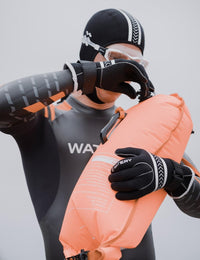
When the water is cold, or the wind bites at the surface, you can feel it quickly – both in terms of comfort and how long you want to stay in the water. With neoprene shirts and pants, you get a flexible set that provides warmth and protection without necessarily needing a full wetsuit. This is especially clever if you dive in changing conditions, travel light, or simply want to adjust your setup from trip to trip.
Here on this page, you'll find neoprene shirts and pants that can be used on their own or as an extra layer under your wetsuit, making it easier to strike the right balance between warmth and freedom of movement.
- More warmth around the core and legs, where heat loss is often felt first
- A flexible set that can be used alone or under a wetsuit
- An ideal choice for coastal dives, travels, and as an "extra layer" in cooler seasons
When should I use neoprene shirts and pants?
Neoprene shirts and pants are for those who want to adapt to the conditions without changing all their gear. Some days, a full wetsuit is perfect – other times, it’s too warm, too cumbersome to travel with, or simply unnecessary if you just want a warm, protective layer for shorter trips. A two-piece set can therefore be a very practical solution, as you can combine and adjust according to water temperature, dive time, and how much you feel the cold.
It makes particularly good sense in these situations:
- If you are diving in cool water and want more warmth without moving up to a thicker wetsuit
- If you want an extra layer under the wetsuit on days when the temperature is tricky
- If you are traveling and want to pack lighter than a full wetsuit, but still need neoprene protection
- If you combine diving and snorkeling and want a flexible setup that works for both
- If you often feel cold during surface breaks and want to quickly add or remove a warm layer
Advantages of choosing a set (shirt + pants)
There is a big difference between jumping into "a random neoprene top" and choosing a neoprene set where the shirt and pants are designed to work together. When fit and thickness match, you typically get less water circulation inside the neoprene, better comfort, and a setup that feels more "cohesive" in the water. That can make you stay warm longer and give you more peace to focus on the dive itself.
At the same time, a two-piece set is practical because you can use the pieces separately. On warm days, the shirt alone might be enough, and in other situations, the pants provide the extra layer that makes a noticeable difference – especially around the legs and core.
- More consistent warmth, as the shirt and pants complement each other
- Less “flush” (cold water washing in and out) when the fit is right
- Better freedom of movement than many experience in a single thicker option
- Easier to adjust according to the conditions: use pieces separately or together
- More comfort during breaks and at the surface, where wind and cooling are quickly felt
- An ideal layer under a wetsuit if you want extra warmth without changing the entire suit
How to choose the right neoprene shirt
The right neoprene shirt is not just about thickness – it’s equally about fit and how you’ll be using it. If it’s to function on its own, it should fit snugly enough to retain warmth while still being comfortable to move in. If it’s to be used under a wetsuit, it’s important that it doesn’t fold, pinch uncomfortably at the shoulders or chest, or make the suit difficult to put on.
As a rule of thumb, it’s beneficial to choose a shirt that fits nicely at the neck and wrists, without feeling “strangled.” This is often where you can feel the difference between a shirt that just feels okay – and a shirt that actually helps you stay warm.
| Detail |
What it means for you |
Good for |
| Thickness |
More neoprene = more warmth, but can feel warmer and bulkier |
Cooler water, longer trips |
| Fit |
Close fit reduces cold water “circulation” |
Warmth and comfort in the water |
| Collar/neck |
Better closure often provides more warmth around the core |
Diving in wind/cool weather |
| Closure (e.g., zipper) |
Easier to put on/off and adjust comfort |
Quick changes, travel, breaks |
Thickness guide for neoprene pants and shirts
The thickness of neoprene shirts and pants often determines whether you feel “warm enough” or end up cold halfway through. But thickness makes the most sense when you consider it along with two things: how long you are in the water, and whether you are using the set alone or as a layer under a wetsuit.
In practice, think of it like this:
- When using the set alone, thickness matters more because the neoprene needs to provide most of the insulation.
- When used under a wetsuit, even a slightly thinner shirt/pants can offer a noticeable warmth boost – without feeling bulky.
Thickness and use table (neoprene shirts and pants)
| Condition |
Recommended thickness |
Use as |
Typically for you who... |
| Warm water / summer / short trips |
1–2 mm |
Alone |
Want light protection and maximum movement |
| Warm to cool water / longer time in the water |
2–3 mm |
Alone or under a wetsuit |
Feel a bit chilly, or want to stay in the water longer |
| Cool water / changing weather |
2–3 mm |
Under a wetsuit |
Want extra warmth on core/legs without replacing the suit |
| Cold water / early spring–late fall |
3 mm (often best as a layer) |
Under a wetsuit |
Want to reduce heat loss and have more peace during the dive |
If you dive in Denmark for large parts of the year, it often makes most sense to think in layers: neoprene shirts and pants as a “warmth boost,” and then a wetsuit to handle the rest.
Neoprene shirts and pants fit
It sounds simple, but fit is typically more important than people think. Neoprene works best when very little water gets in, and the water that does gets "heated up" and stays inside. If the shirt or pants are too loose, you’ll get more water circulation – and even a good thickness suddenly feels cold.
Instead of a long checklist, here are the most important “signs” to look for when trying the set:
It should feel right like this
- Close contact at the neck, waist, wrists, and ankles without squeezing uncomfortably
- You can raise your arms and rotate your shoulders without the shirt pulling up or tightening across the chest
- The pants fit securely at the waist, so they don’t “slide” and let cold water in during movement
- No large folds behind the knees, at the waist, or under the arms (folds often cause more water “pumping”)
And if it feels like this, the size is typically wrong
- You feel pinched/pressure, or it feels difficult to breathe normally (too tight)
- You can easily pull the fabric away from the body in several places, creating “pockets” (too loose)
- The pants slide down or roll at the waist when you move (fit/cut is wrong)
A small tip that often works: If you are between two sizes and want to use the set under a wetsuit, the size that fits the smoothest and closest (without being tight) may provide the best combination of warmth and comfort.
Find neoprene shirts and pants here
Find neoprene shirts and pants here on the page and choose the set that suits your dives and temperature limit. Whether you want to use it alone on warm days or as an extra layer under your wetsuit, a good neoprene set is a simple way to get more warmth, more comfort, and spend longer in the water. If you're unsure about thickness or fit, reach out to us – we’re happy to help find the right solution for your next dive.
 Equipment
Snorkel equipment
Open water swimming
Stand up paddle
Kids
Brands
Equipment
Snorkel equipment
Open water swimming
Stand up paddle
Kids
Brands






 Season Kickoff