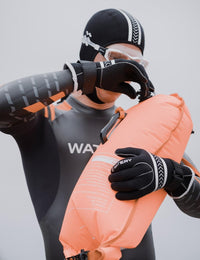
Dreaming of taking your training from the pool tiles to the great outdoors? Ireland offers ideal conditions for sea swimming with calm waters and endless coastlines, making it incredibly easy for you to start open water swimming. Whether you're training for your next big challenge in swimrun, or you just need the right water sports gear to enjoy the freedom of the sea, we've got you covered for the journey. Here on this page, we gather all the essential gear so you can confidently dive into the blue waves, stay warm, and focus solely on having the best possible experience in the water.
The essential gear for your first open water swim
When you swap the safety of the pool for the open sea, new demands are placed on your safety and preparation. The right sea swimming gear is not just about keeping warm, but equally about making yourself visible to boats, paddleboarders, and others on the water. To give you the best and safest start, we've compiled a checklist of gear you simply can't compromise on for your first swims.
- A brightly colored swim cap that stands out in the water, making you easily visible from a distance. It also helps retain your body heat when the water is chilly.
- A swim buoy is your ultimate safety buddy. It ensures you're much more visible in the waves and provides something to rest on if you need a short break along the way.
- Need to bring car keys, a mobile phone, or some energy on your route? A waterproof swim buoy is the perfect solution, combining practical storage with necessary visibility.
- A good pair of swim goggles with a wide view is crucial. In open water, you need to quickly orient yourself and see landmarks clearly. Opt for models that fit snugly and protect your eyes from the sun's glare.
How to choose the right wetsuit for sea swimming
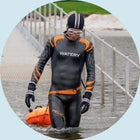
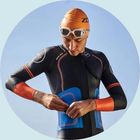
When you venture into open water, your wetsuit is your most important piece of equipment. A good wetsuit not only provides the necessary buoyancy but also ensures you stay warm and can focus solely on your technique. There's a big difference between suits for fun and suits for targeted training, which is why we always recommend looking specifically for swimming wetsuits, as they offer optimal freedom of movement around the shoulders and arms.
Choose neoprene thickness based on water temperature
To have the best experience in the waves, match your suit with the current water temperature. The right neoprene thickness plays a crucial role in your overall comfort in the water.
In midsummer, when the water is over 16 degrees, a suit of 2-3 mm is the ideal choice. It gives you maximum flexibility and ensures you don't overheat on warm days.
If your season extends into the shoulder season, where temperatures typically range between 10 and 15 degrees, you'll need more insulation. Here, choose a suit of 4-5 mm, which protects your body from the cold, allowing you to swim longer distances without freezing.
Popular brands and our wetsuit guide
The market offers many fantastic options when you're looking for your next sea swimming wetsuit.
At Watery, we sell the most recognized brands that thousands of swimmers trust every day. You can benefit from the innovative design from Orca, the renowned quality from Zone3, or our own models from Watery, developed directly based on swimmers' real needs
If you're still unsure which model best suits your level and ambitions, dive into our wetsuit guide, where we help you make the right choice.
Avoid chafing and optimize your comfort in the water
When swimming long distances in the sea, you might already know the burning sensation on your neck or under your arms. Chafing from the wetsuit is one of the most common challenges among sea swimmers, and it can quickly take your focus away from the technique itself. We've experienced firsthand how saltwater and repeated arm strokes create friction that can ruin an otherwise fantastic training session.
To achieve maximum comfort throughout your route, we always recommend applying a good layer of anti-friction cream to the most exposed areas before zipping up the suit. The cream forms an invisible protective layer on the skin, allowing the neoprene to glide effortlessly with every stroke. This makes your swim significantly more comfortable and is especially crucial if you're training specifically for triathlon swimming, where you need to swim undisturbed for longer periods.
Avoid unnecessary irritation and explore our wide range of open water accessories, where you'll find the right creams for the purpose. If you're training specifically for an event, we've also gathered all the necessary equipment for the triathlon swim segment, so you can focus one hundred percent on your performance in the water.
Extend the season with the right neoprene accessories
When the calendar shifts to autumn and the water temperature drops, you absolutely don't need to pack away the wetsuit. On the contrary, you can significantly extend your open water season by simply supplementing your gear with the right neoprene accessories. Swimming in cold water provides an amazing rush and a special calm, but it also places greater demands on your clothing. The body quickly loses heat through the head, hands, and feet, which is why it's crucial to protect these exposed areas. With the right equipment, you avoid freezing and can instead fully enjoy the refreshing swims.
| Equipment for the colder months |
Function and benefit in the water |
| Neoprene hood |
A lot of your body heat escapes through the top of your head. A snug neoprene hood effectively insulates and prevents the cold water from cooling you down, allowing you to swim longer without feeling the cold bite on your forehead. |
| Neoprene socks |
Your feet are often the first place to go numb. A pair of thick neoprene socks keep your toes warm and ensure you maintain full mobility for your kicks throughout the swim. |
| Neoprene gloves |
When swimming, you need to feel the water and pull through properly. Neoprene gloves protect your fingers from the cold while still giving you excellent feel with your strokes. |
| Neoprene swim shoes |
Besides providing warmth, neoprene swim shoes protect you from sharp stones and shells on your way into the water. They have a more robust sole, making them ideal for beaches where the bottom can be very challenging. |
When we hit the deepest winter months, conditions change further. Here, the long swim often transitions to a more intense and invigorating dip. If you want to continue into the icy waves, it requires a slightly different approach and setup. Here, we recommend you take a closer look at our large selection for winter swimming, where you'll find all the necessary gear to make the cold plunge a success. If you prefer to bring cold training home to your garden, you can also explore our popular ice baths, which allow you to strengthen body and mind year-round.
How to maintain your sea swimming gear
To enjoy your wetsuit for many seasons, thorough maintenance is crucial. When you come out of the water, you should always check your gear to ensure small damages don't suddenly develop into bigger problems. Follow these simple steps to extend the life of your gear:
- Always rinse the suit in cold fresh water and check the surface thoroughly for small tears from nails, shells, or sharp stones.
- If you discover a small hole, you can easily handle a quick wetsuit repair at home before the damage expands and ruins the insulation.
- Simply apply a little neoprene glue directly into the tear, press the edges together, and let it dry. Your suit will be quickly sealed and ready for the next swim in the waves.
Find all your sea swimming gear at Watery
Get fully prepared for your next adventure in the waves with the right sea swimming gear. Here with us, we've gathered everything you need for a fantastic open water swim, whether you're a beginner or an experienced swimmer. We only sell recognized brands of the absolute best quality, so you can feel safe from start to finish. With lightning-fast processing and the option for free shipping, our many Watery benefits are designed to give you the best shopping experience when upgrading your gear.
If you need advice and guidance, we're of course ready to answer all your questions. So you can confidently get properly equipped, ready to dive into the water.
FAQ - Frequently Asked Questions about Sea Swimming
What equipment is necessary for beginner sea swimming?
The equipment necessary for beginner sea swimming primarily includes a good swimming wetsuit, a brightly colored swim cap, and a swim buoy. This basic equipment ensures you can stay warm in the water and makes you visible to boats and others on the water. Additionally, swim goggles with a wide view are crucial for orientation.
How thick should a wetsuit be for sea swimming?
The thickness of a wetsuit for sea swimming depends entirely on the current water temperature. When the water is over 16 degrees in the summer, a thickness of 2-3 millimeters is ideal for maintaining flexibility. If swimming in the shoulder season, where the water is between 10 and 15 degrees, the suit should be 4-5 millimeters to provide optimal insulation.
Why use a swim buoy for sea swimming?
A swim buoy is used for sea swimming because it serves as an absolutely essential safety buddy in open water. The swim buoy ensures you're much more visible in the waves to paddleboarders and boats. It also provides a floating element to rest on if you suddenly need a short break during your swim.
How do you avoid chafing from your wetsuit?
You avoid chafing from your wetsuit by applying a protective layer of anti-friction cream to the body's most exposed areas before zipping up the suit. The cream forms an invisible barrier on the skin, effectively preventing the uncomfortable friction on the neck and underarms that often occurs in the interaction between saltwater, neoprene, and repeated swimming strokes
 Equipment
Snorkel equipment
Open water swimming
Stand up paddle
Kids
Brands
Equipment
Snorkel equipment
Open water swimming
Stand up paddle
Kids
Brands






 Anniversary